
If you have a dog that licks every blade of grass or a cat that prowls the laundry skirting boards, calling someone to spray your home for ants can feel like a gamble. We get the question constantly: is this safe for my pets? At TSD, our pet safe ant pest control approach for Tweed Heads and Banora Point homes is built around products and techniques that target ants specifically while keeping your animals out of harm’s way.
What "Pet Safe" Actually Means
The phrase gets thrown around a lot, so we want to be honest. There is no pest treatment that is completely inert to every animal at every dose. What we mean by pet safe is that the products we use have a very low toxicity profile to mammals when applied correctly, and we keep your pets away from treated zones until everything has dried and absorbed. We have seen it happen where homeowners panic-clean a freshly treated skirting board because the dog showed too much interest, then the treatment is gone within an hour. We avoid that by walking you through the dry time before we leave.
The Products We Choose for Pet Households
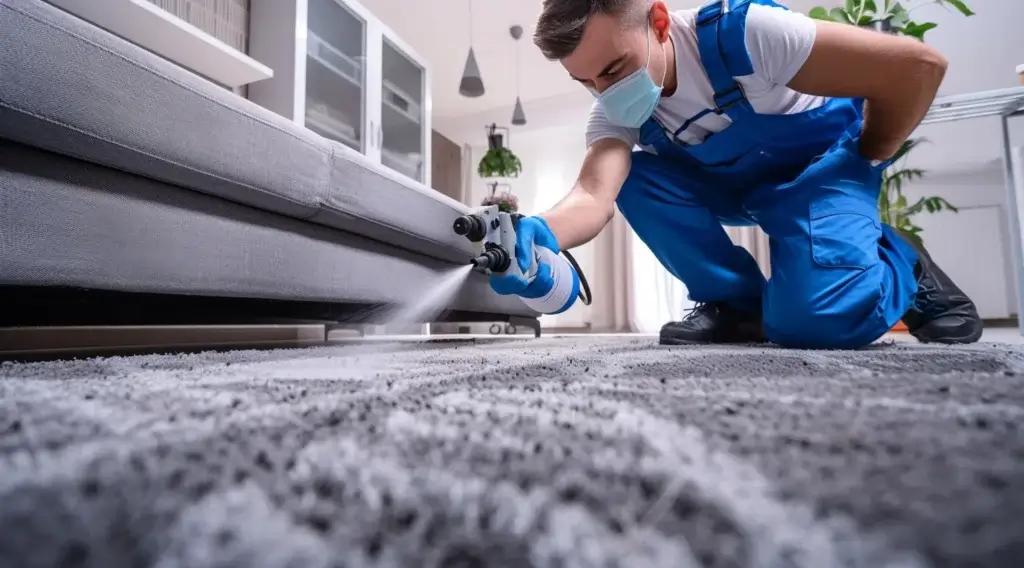
For homes with cats, dogs, birds or rabbits, we lean heavily on gel baits and targeted dust applications rather than broad-spectrum sprays. Gel baits go into wall voids, behind appliances, and along ant entry points where pets cannot reach them. The ants carry the bait back to the colony, which means we are not coating your living areas with anything. When we do need a liquid product, we use non-repellent options that are formulated to be low-impact on warm-blooded animals. We also keep fish tanks and reptile enclosures in mind, since their ventilation needs are different and they are far more sensitive to airborne residues.
What We Ask Pet Owners to Do Before We Arrive
The biggest favour you can do for your pets is move their food and water bowls, beds and toys to one room before we start. We will treat that room separately at the end so it stays accessible. If you have an outdoor area where your dog spends most of its time, let us know in advance so we can plan around it. We recently completed a job in Bilambil Heights where the family had a labrador that lived for the back deck. We treated indoors first, gave it the full dry time, then handled the outdoor perimeter while the dog was kept inside for the afternoon. Worked perfectly.
Dry Times and Re-Entry: The Honest Numbers
Most of the products we use need two to four hours to fully dry and bind to the surface. After that, residue transfer to pets is minimal. We always tell clients to keep cats off treated skirting boards and dogs out of treated garden beds for the full dry time, then they can resume normal access. Indoor gel baits in cracks and crevices are essentially out of reach the moment we walk out the door, since they are placed where pets simply cannot get to them. We will not pretend an ant treatment is the same as no treatment at all, but we make the gap as small as we can.
What We Will Not Do in a Pet Household
We do not use repellent surface sprays in open living areas where pets spend their time. We do not use granular outdoor baits in areas where dogs roam unsupervised because granules look like food to a curious dog. We do not use fogger or bomb-style products under any circumstances in a home with pets, full stop. If a previous pest controller has used these methods on your home, that is one of the reasons your pets may have shown sensitivity afterwards. Our approach is targeted, low-residue, and built around how pets actually behave in a home.
Birds, Fish and Reptiles: Extra Care Required
Birds are far more sensitive to airborne chemicals than mammals because of how their respiratory systems work. If you have a parrot, budgie or finch, we will ask you to move the cage to a sealed room or a friend’s house for the day. Fish tanks need their pumps and filters covered, and we keep all liquid products well away from the tank. Reptile enclosures with mesh tops need similar treatment. We have done this enough times to know the protocols, and we would rather take an extra fifteen minutes setting up than risk a beloved pet.
If you want a treatment that takes your pets seriously, we are happy to walk you through exactly what we use and why before we start. You can read more about our wider pet safety approach across all treatments, see the rest of our ant pest control service, or check our guide on outdoor ant control. To book in or just ask questions, get in touch.
Pet Safe Pest Control, Done Properly
Talk to a licensed Tweed Heads pest controller who works with pet households every week. We will explain exactly what we use, where, and why.
Frequently Asked Questions
Are gel baits really safer than sprays for my dog?
Yes, when placed correctly. Gel baits go into wall voids, behind kickboards, under fridges and inside cracks where dogs cannot reach. The active ingredient is at very low concentration and bound in a sticky matrix the dog would have to actively chew at to ingest meaningfully. Compared to a sprayed skirting board the dog can lick directly, baits in proper placement are much lower risk.
How long do I need to keep my cat off treated areas?
For most products we use, two to four hours of dry time is enough. After that, residue transfer is minimal. The honest exception is if your cat is the type to actively rub against freshly treated walls within the first hour, in which case we recommend a full half day of separation just to be certain. We will tell you specifically when we leave each job.
What if my pet does come into contact with the treatment?
For limited contact within the dry window, monitor for any unusual behaviour and rinse the area of fur with warm water and pet shampoo. Most exposures cause no symptoms at all. If your pet shows excessive drooling, vomiting, lethargy, or tremors, contact your vet immediately and tell them which product was used. We provide product names so you have that information on hand.
Do I really need to move the bird cage?
For ant treatments, usually we ask you to move the cage to a separate sealed room with the door closed for a few hours rather than out of the house entirely. Birds are sensitive to airborne particles in a way mammals are not. The risk is small but the consequences if something does go wrong are serious, so we always err on the side of caution.
Trae
TSD Pest Control is a locally owned pest management business based in Banora Point, serving Tweed Heads and the wider Northern NSW region. Its technicians are licensed and carry out inspections and treatments across homes and businesses — covering termites, ants, cockroaches, spiders, rodents and more — and write these guides to help local property owners manage the pests common to the Tweed Coast.