
If you have lived in a northern NSW home for long, you have probably heard someone mention white ants. Around Banora Point and Tweed Heads they come up a lot, usually with a note of worry. So what are white ants, and why do they cause homeowners so much concern?
The short answer is that white ants are not ants at all. They are termites, and that difference matters more than the name suggests.
White Ants Are Really Termites
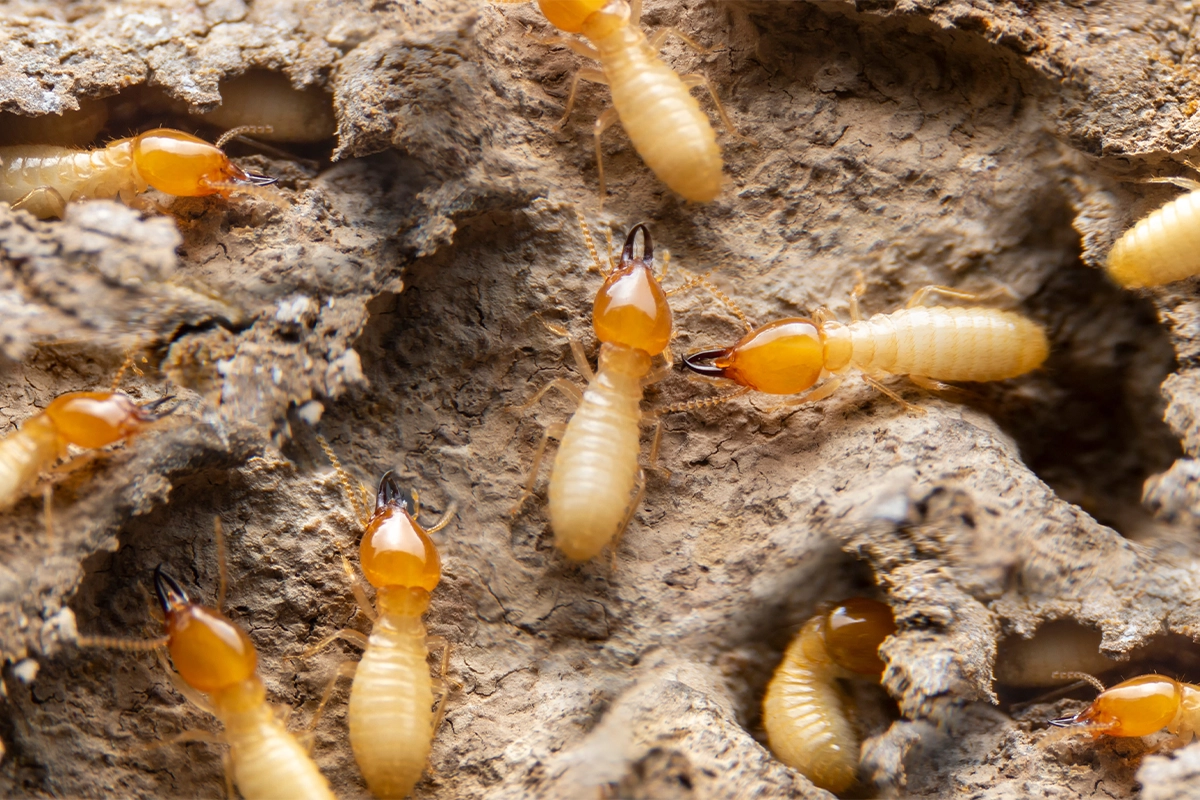
White ant is simply a common Australian nickname for termites. The name stuck because, at a glance, a pale termite worker looks a little like an ant. Biologically though, they are worlds apart. Termites are more closely related to cockroaches, and they live and behave in ways that make them far more damaging to a home than any true ant.
How to Tell a White Ant from a Real Ant
Telling them apart helps you know what you are dealing with. A few clear differences:
- Colour: termites are pale, creamy or translucent, while most ants are darker
- Waist: ants have a narrow, pinched waist, termites have a straight, broad body
- Antennae: ant antennae are bent or elbowed, termite antennae are straight and beadlike
- Wings: a flying termite has four wings of equal length, an ant has two pairs of different sizes
If the insects you have found are pale and soft-bodied, treat it seriously until you know otherwise.
Why White Ants Threaten Your Home
Termites feed on cellulose, the material that makes up timber. In a home, that means the structural framing, flooring, skirting and door frames are all on the menu. Because they work from the inside out and avoid the light, they can hollow out timber for months while the surface still looks perfectly normal. In a warm, humid area like the Tweed, colonies stay active for much of the year, which is why local homes are so often affected.
Signs to Watch For
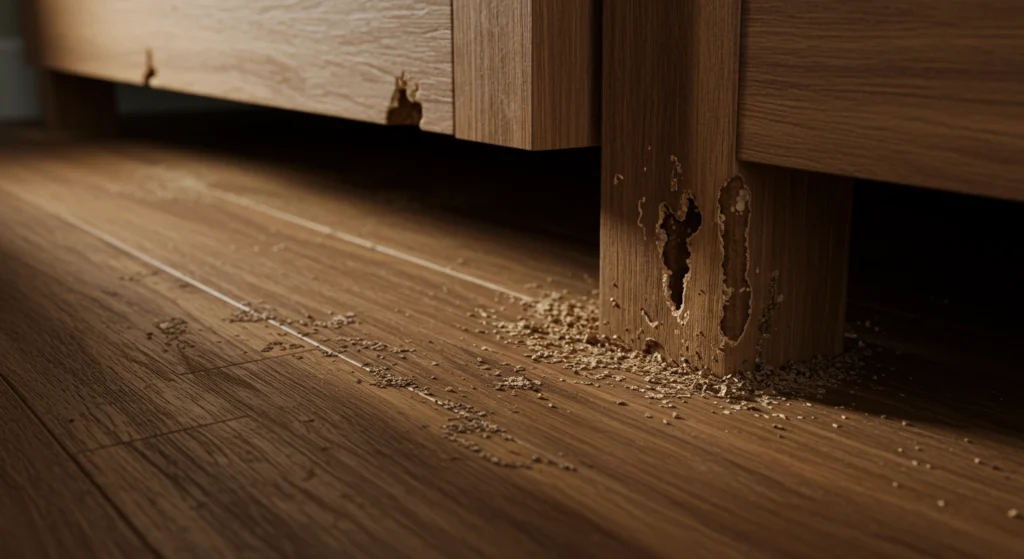
Early signs are subtle, so it pays to know them. Look for mud tubes on walls or foundations, timber that sounds hollow when tapped, paint that blisters or bubbles, and doors or windows that suddenly stick. Small piles of what look like sawdust, or discarded wings, can also point to activity nearby.
What to Do if You Suspect White Ants
If you think you have white ants, the worst thing you can do is disturb them, since that can push the colony to move and spread. Leave them be and arrange a professional inspection instead. A local termite treatment service can confirm what you are dealing with and set up a plan to protect your home.
If something has you worried, get in touch with our team and we will take a proper look.