
You sprayed the trail on Tuesday. Wednesday morning the ants were back, and by Friday it felt worse than before. If you have been stuck in this loop on a property in Banora Point, Tweed Heads or anywhere along the Tweed Coast, you are not doing anything wrong. The problem is what you are doing has nothing to do with how ant colonies actually die. Here is the real reason ants come back after spraying and what we do differently.
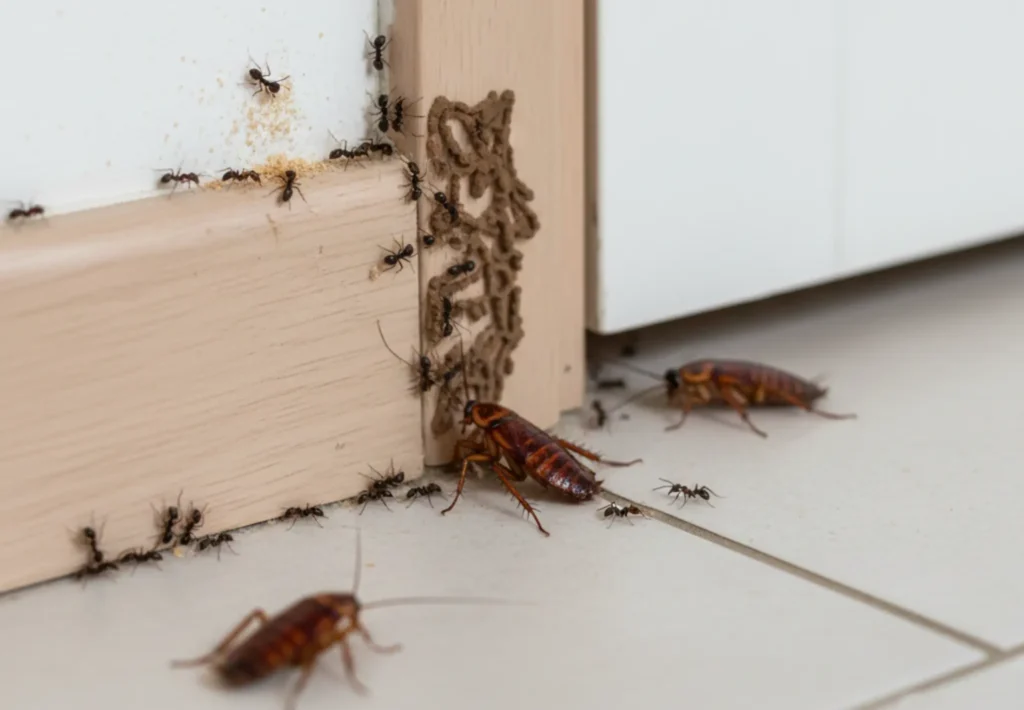
You Are Killing Workers, Not the Colony
The ants you can see on the bench are workers. They are roughly five percent of the total colony, and the colony can replace them faster than you can spray. The queen, the brood, and ninety-five percent of the population live somewhere else, usually in a wall void, under the slab, behind the dishwasher, or in the garden. Workers are disposable. The colony does not even slow down when you take a few hundred of them out, because the queen produces more every day. Until the queen is gone, ants will keep coming.
Repellent Sprays Make the Problem Worse
Most over the counter ant sprays are repellent products. The ants detect the chemical and avoid it, which sounds great until you learn what happens next. The colony often responds by splitting into multiple satellite nests, each with its own breeding females, to spread the risk. We have seen one nest in a backyard turn into four within a month after repeated repellent spraying. The original problem was solvable in one visit. The new problem now needs four. This is the worst possible outcome and it happens constantly.
Why Bait Works When Spray Does Not
Bait works because it uses the colony against itself. A worker carries a small drop of slow-acting bait back to the nest, shares it with other workers through trophallaxis, and eventually feeds the queen. Within two to three weeks the queen dies and the colony collapses. There is no satellite split because the ants do not perceive the bait as a threat. They treat it as food and bring it home willingly. This is the only method that consistently kills the colony rather than just the workers you can see.
What We Do Differently on a Property
When we inspect a property we are looking for the nest, not the trail. The trail is a symptom. We follow it backwards, find the entry point, and try to identify whether the colony is inside the structure or outside in the garden. Then we use a mix of non-repellent perimeter treatment and targeted bait stations placed where the foragers will actually find them. We do not blanket-spray surfaces because that would scare the foragers off and stop them from carrying bait home. The whole point is to keep the trail active long enough for the bait to reach the queen.
What You Can Do While Treatment Is Working
The single most useful thing you can do during treatment is leave the trail alone. Do not spray it, do not wipe it down with cleaner, do not block the entry point. Every worker that travels back and forth is carrying bait. We know it feels wrong to watch ants on the bench and not react, but every ant you let walk is helping kill the colony. Continue normal cooking and cleaning, just avoid the specific area where bait is placed. Within a week the trail intensity will start dropping noticeably.
When the Colony Is Outside the House
Many of the trails we treat in Tweed Heads come from colonies in retaining walls, garden beds, paving cracks, or under decking. The ants are using the house as a food source but living outdoors. We recently completed a job in Casuarina where the trail ran from the kitchen all the way out to a paver gap two metres past the back door, and the actual nest was three pavers further along. We treated the nest directly. The trail was gone within four days and stayed gone.
If you have been spraying the same trail every week and feeling like nothing is working, that is because nothing is. The colony is intact and adapting. The fastest way out of the loop is targeted bait placement and a treatment plan that ignores the trail and goes after the nest. Read more about our ant pest control service, see our breakdown of DIY versus professional treatment, or get in touch and we will sort it.
Stop Spraying. Start Killing the Colony.
A licensed Tweed Heads pest controller can identify the nest and bait it properly. One visit usually solves what weeks of spraying could not.
Frequently Asked Questions
Why do ants always come back to the same spot in my house?
Because something at that spot is rewarding for them. Either there is a food source you have not found, or the spot offers easy access to where the colony lives. Ants do not pick locations randomly. If a trail keeps reappearing in the same spot, it means scouts are still finding what they need there. Solving the trail means finding what is keeping them interested.
How long after baiting before I can clean the area normally?
Wait until the trail has visibly stopped for at least three days, then resume normal cleaning. If you wipe down the area while the trail is still active, you destroy the pheromones the workers use to find the bait, which slows down the kill. Most trails go quiet within two weeks of proper baiting.
Can I bait and spray at the same time for faster results?
No. Spraying repels the ants from the bait area, so you stop the very mechanism that kills the colony. Pick one approach and commit to it. If you choose bait, leave the spray in the cupboard until the colony is gone. We see a lot of homeowners ruin good treatments by combining the two.
What if I cannot find where the ants are coming from?
That is the most common reason DIY treatment fails. The nest may be inside a wall void, under the slab, or in the garden somewhere you would not think to look. A licensed pest controller has thermal cameras, moisture meters, and the experience to find what you cannot. We have located nests inside ceiling cavities, behind kickboards, and inside the bottom of a pot plant. They can be anywhere.
Trae
TSD Pest Control is a locally owned pest management business based in Banora Point, serving Tweed Heads and the wider Northern NSW region. Its technicians are licensed and carry out inspections and treatments across homes and businesses — covering termites, ants, cockroaches, spiders, rodents and more — and write these guides to help local property owners manage the pests common to the Tweed Coast.