
A can of supermarket ant spray costs $20 and the satisfaction lasts about two days. A licensed professional treatment costs more upfront and the result lasts the full season. That is the short answer for most Tweed Heads and Banora Point homes. The longer answer depends on what species you are dealing with, where the nest is hiding, and how much time you want to spend on the same problem. We have answered this question hundreds of times across the Tweed Coast, and the honest truth is that DIY works well for some situations and fails badly for others. This guide explains exactly when each approach is the right one for your home.
What DIY Ant Sprays Actually Do
Supermarket sprays are contact insecticides. They kill the ants you can physically see on the surface where you spray them. The active ingredients are usually pyrethroids like deltamethrin or bifenthrin, which knock down foragers within seconds. What they do not do is kill the queen, the brood, or the rest of the colony hidden underground or in a wall cavity.
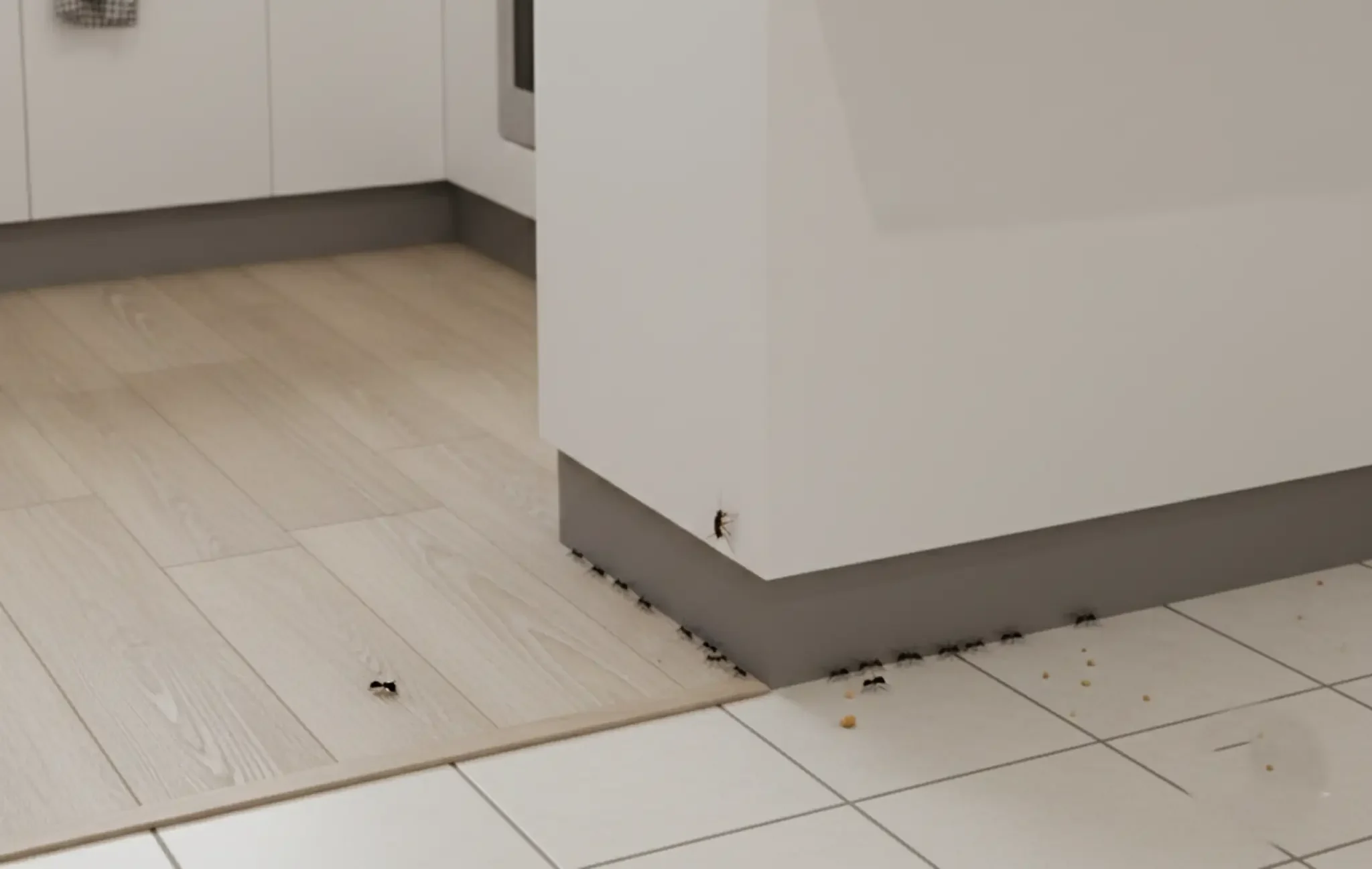
This means that when you wipe down a sprayed surface and the visible ants disappear, the problem looks solved. It is not. The colony continues producing fresh foragers, and within days a new trail finds a different route into the same kitchen. We see this loop play out constantly on Tweed Heads jobs where the homeowner had been spraying for months before calling us.
What Professional Treatment Actually Does
Professional treatment is built around eliminating the colony, not the trail. A licensed technician identifies the species, locates the nest or nesting zone, and applies products that the foragers carry back to the queen. Granular bait, gel bait, and non-repellent residual sprays all work this way. The bait is shared through the colony by trophallaxis, the natural food-sharing behaviour ants do every day, and within two to three weeks the colony collapses from the inside.
This is why a professional job often looks like nothing happened for the first week. The trails are still visible. The difference shows up at the two-week mark when the foragers stop appearing because the queen has stopped producing them. We recommend giving any professional treatment a full three weeks before judging whether it worked.
When DIY is the Right Call
DIY makes sense when you have a small, accessible, single-species problem caught early. A few sugar ants on the kitchen bench from a single trail coming in under the back door is a perfect candidate for a $20 gel bait from Bunnings. Place a few drops along the trail, leave them alone for 48 hours, and the problem usually resolves itself.
DIY also works well as preventative maintenance. A perimeter spray of bifenthrin around the house twice a year keeps casual foragers from establishing a foothold in the first place. We recommend this for Banora Point homes that border bushland or open paddocks, where ant pressure is constant.
When DIY Will Cost You More in the Long Run
DIY fails badly when the problem involves multiple ant trails, more than one species, nests in concrete pads or wall cavities, or any signs of fire ants. We have walked into Tweed Heads homes where the homeowner had spent $200 over six months on supermarket sprays and the colony was thriving. The same job done professionally would have cost less and ended in three weeks.
Carpenter ants are another DIY trap. They tunnel through softened timber and are often mistaken for termites. Spraying the visible workers does nothing because the nest is buried inside the wood. We have seen properties in Banora Point where a carpenter ant nest was treated with surface spray for a year before the homeowner realised the timber damage was structural.
The Hybrid Approach We Sometimes Recommend
For Tweed Coast homeowners who want the best of both, we sometimes recommend a one-off professional treatment to clear the existing problem followed by quarterly DIY perimeter sprays to prevent reinvasion. This costs less than an annual plan and works well for properties without recurring high pressure. The professional visit kills the colony. The DIY maintenance keeps casual foragers from rebuilding.
This is the approach we recommend for Banora Point homes where the original problem has been solved but the location keeps creating fresh ant pressure from neighbouring blocks or seasonal weather changes.
Cost Over a Full Season: An Honest Breakdown
Six months of DIY spraying on an active ant problem typically runs $140 to $280, plus 10 to 15 hours of your time, with no guaranteed result. A single professional treatment for the same problem runs $180 to $280 and ends the cycle. The math favours professional once the problem is more than a single trail or has been running longer than two weeks.
For a clearer picture, see the cost comparison below. The numbers are based on what we see across actual Tweed Heads and Banora Point jobs each year, not theoretical pricing.
How to Know When You Have Crossed the Line
If you have sprayed the same area more than three times in a fortnight, the trails keep returning, or you are seeing more than one species, DIY is no longer the right tool. At that point you are paying for the symptom, not the cause. A professional inspection is the cheaper outcome from there.
DIY vs Professional: What Does It Really Cost?
For a typical Tweed Heads or Banora Point ant problem
Supermarket Sprays & Baits
Targeted Bait Treatment
Indicative ranges for typical residential ant problems. Request an exact quote for your property.
Send us a photo of the trail or the species through our contact page and we will tell you within an hour whether the problem is genuinely a DIY job or a professional one. For a deeper look at our local service, see ant pest control in Banora Point, or read our companion guide on how to stop ants in your garden and outdoors.
Stop Paying for the Symptom
Pay once for a treatment that targets the colony. quotes for Tweed Heads and Banora Point homes within the hour.
Frequently Asked Questions
Is DIY ant spray ever as effective as professional pest control?
For a small, accessible, single-species problem caught early, DIY gel bait works as well as professional treatment. For multiple trails, more than one species, hidden nests, or carpenter ants, DIY almost always fails. The line is whether the problem is one trail or a system.
Why do DIY sprays make the problem worse sometimes?
Repellent sprays like pyrethroids can split a colony into multiple satellite nests when foragers detect the chemical and avoid it. The original colony survives, new ones form, and you end up with three problems instead of one. Non-repellent professional products avoid this trap.
How long does professional ant treatment take to work?
Professional bait-based treatments take two to three weeks to fully collapse a colony. Trails may still appear in the first week as foragers carry bait back to the queen. We recommend not spraying anything during this window because it disrupts the bait pickup. Most jobs are clear by week three.
What is the cheapest effective approach over a full season?
A single professional treatment plus quarterly DIY perimeter sprays usually works out cheapest for properties with moderate pressure. The professional visit eliminates the colony, the DIY maintenance prevents reinvasion. This hybrid sits between $250 and $400 over six months versus $300+ for repeated DIY only.
Trae
TSD Pest Control is a locally owned pest management business based in Banora Point, serving Tweed Heads and the wider Northern NSW region. Its technicians are licensed and carry out inspections and treatments across homes and businesses — covering termites, ants, cockroaches, spiders, rodents and more — and write these guides to help local property owners manage the pests common to the Tweed Coast.