
People often ask why we charge differently for indoor and outdoor ant work, or why we use different products in each space. The answer is that indoor ants vs outdoor ants need very different approaches even when the species is the same. Here is how we adjust the treatment depending on whether the colony is in your kitchen wall or under your retaining wall, drawing on what we have learned across thousands of jobs in Banora Point and the wider Tweed Coast.
The Same Species, Two Different Problems
Coastal Brown Ants are a great example. Outdoors, they nest under pavers, in mulch, between retaining wall blocks, and in lawn edges. Indoors, the same species nests in wall voids, behind kickboards, and inside roof spaces. The biology does not change but the access, the products that are safe to use, and the follow-up requirements all do. An outdoor treatment that would be perfectly fine in the garden is not appropriate sprayed across a kitchen bench, and a careful indoor gel bait would be useless against an outdoor colony fifteen metres from the house.
Indoor Treatment: Targeted, Low-Residue, and Patient
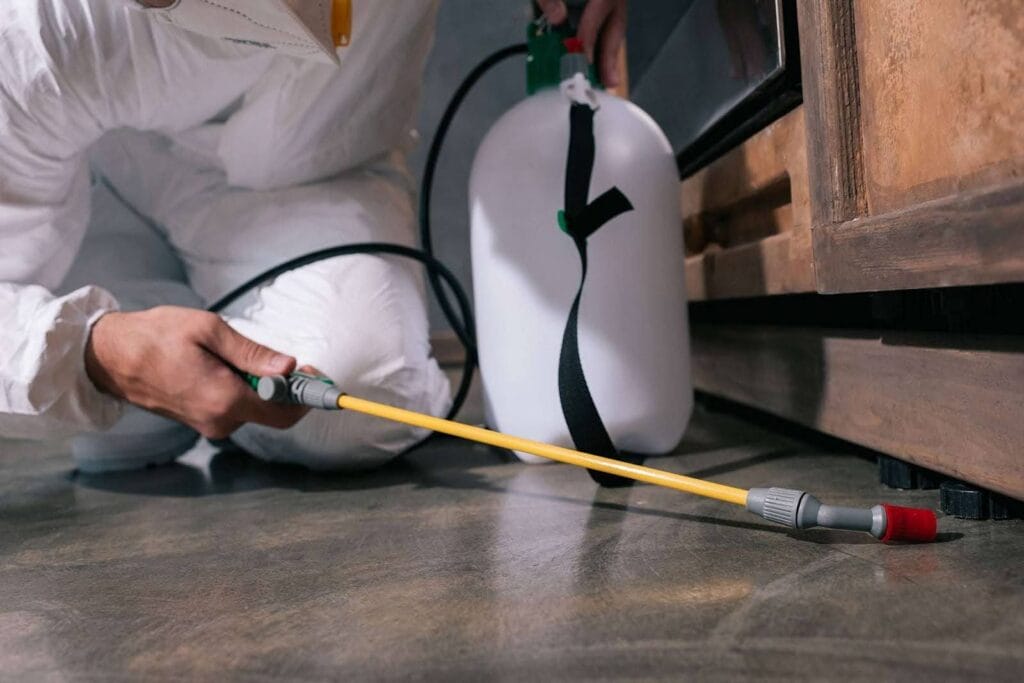
Inside the house, our priority is to treat without leaving residue across surfaces where people prepare food, where pets walk, and where children sit on the floor. We lean on gel baits placed inside cracks and crevices, dust applications inside wall voids accessed through power point cavities, and non-repellent perimeter treatments applied to skirting boards rather than benches. The whole approach is built around minimising exposure while maximising the chance the bait reaches the colony. We rarely use surface sprays indoors anymore because the satellite-splitting risk is too high.
Outdoor Treatment: Volume, Coverage, and Direct Hits
Outside, we use higher-volume treatments because we are working across larger areas and weather will dilute the product. Granular baits work well across lawns and garden beds, liquid perimeter sprays handle the building footprint, and direct nest treatment gets used wherever we can locate the colony. Outdoor treatments also have to factor in rain, irrigation, sun exposure, and the natural break-down of the active ingredient. We will sometimes layer two or three different methods on a single property to make sure the colony is hit from multiple angles.
When Indoor and Outdoor Are the Same Job
About half the indoor ant jobs we do are actually outdoor jobs in disguise. The colony lives outside, the foragers come inside for food, and treating only inside leaves the source untouched. We always inspect the perimeter, the garden beds within ten metres of the house, and any retaining walls or paving when we treat indoor ants. We have experienced this pattern enough times that we now treat outside as standard whenever indoor ants are involved, unless we can clearly identify the nest as being inside the structure.
What Changes for Pet Households
Outdoor treatment in a pet household requires different choices than the same job in a pet-free yard. Granular baits look like food to a curious dog, so we either avoid them or place them in tamper-resistant stations. Liquid sprays applied to lawn edges need full dry time before pets are let back out. Indoor pet households push us further toward gel baits and away from any product that might be tracked across food prep surfaces. We adjust the plan around what your animals actually do and where they spend their time.
Why a Single Treatment Will Not Always Cover Both
If you have ants both inside the house and visibly running across the front path, you may need two different treatments scheduled together. The indoor work uses different products at different concentrations than the outdoor work, and our pricing reflects that. We are upfront about this when we quote. We recently completed a job in Tweed Heads where the homeowner expected one combined treatment to handle both, and we explained why that would actually cost more than the two-stage approach we recommended. The split made sense once we walked through it.
The short version: indoor ants get gel baits and patience, outdoor ants get coverage and direct hits, and most jobs need a bit of both. If you are not sure where your colony actually lives, that is exactly the kind of inspection we are good at. Read more about our ant pest control service, our piece on bathroom ants if that is your specific issue, or get in touch.
Indoor, Outdoor, or Both?
Let us inspect both spaces and quote the right treatment for each. No double-charging, no guessing, just a clear plan.
Frequently Asked Questions
Should I treat outside if I only see ants inside?
Usually yes. About half the indoor ant trails we treat are coming from a colony living outside the house. Treating only indoors leaves the source untouched, the colony recovers in days, and the trail returns. We always inspect the perimeter and within ten metres of the building when we treat indoor ants, and we usually find the actual nest somewhere outside.
Is outdoor ant treatment safe for my lawn and garden?
The products we use outdoors are formulated for outdoor application and break down properly with sun and water exposure. They will not damage lawn or established plants when applied to label rates. We avoid spraying flowering plants directly during the day because of bee activity, and we time the work around your watering schedule so the treatment has time to bind before any irrigation runs.
How often should outdoor ant treatment be reapplied?
For most Tweed Heads properties, we recommend a treatment every six to twelve months as a maintenance schedule. Coastal humidity, summer rain, and the year-round breeding season here mean colonies recover faster than they would inland. Properties with heavy mulch, dense gardens, or retaining walls often need the shorter end of that range.
Why are some ant treatments cheaper than others?
Cheaper treatments usually mean a single perimeter spray and nothing else. That handles the foragers you can see today, but it does not target the colony, so the trail is back within weeks. Proper treatment includes inspection, identification, targeted bait or direct nest application, and a follow-up window. The cost difference reflects what is actually being done.
Trae
TSD Pest Control is a locally owned pest management business based in Banora Point, serving Tweed Heads and the wider Northern NSW region. Its technicians are licensed and carry out inspections and treatments across homes and businesses — covering termites, ants, cockroaches, spiders, rodents and more — and write these guides to help local property owners manage the pests common to the Tweed Coast.